Leading GDG on Campus: What I Learnt Leading the Largest Tech Community at RCC
When I took over as Lead Organiser of GDG on Campus RCCIIT, I had a rough plan and a lot of confidence. The confidence ran out by October. The plan got rewritten every month.
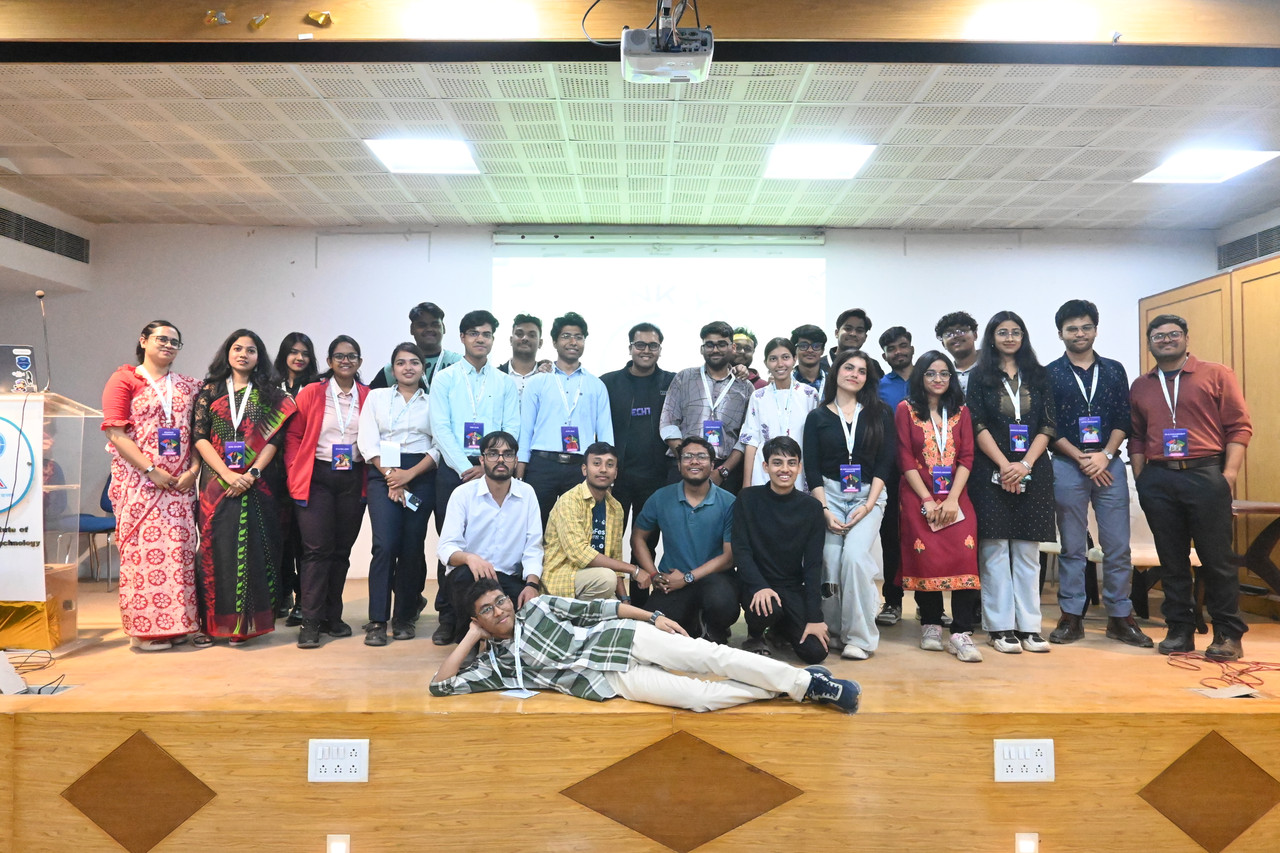
By May we had 3,051 members, ran 14 events, and had over 2,000 people check in across the year. Google rated us a Tier 1 chapter. We ended up in the top 3 chapters in Kolkata and the top 5 in West Bengal. Those numbers look neat now. Living through them was not neat.
This is my attempt to write down what I actually learnt, before I forget the details and start telling a cleaner version of it.
It started with an info session and a spreadsheet
Our first event of the year was a virtual info session on 25 September. 203 people registered and 155 showed up. We walked them through every track we had: Web, App, AI/ML, Web3, Cybersecurity, CP/DSA, PR and Design.
In the weeks after that, 929 students joined the chapter. I remember refreshing the member count and feeling great about it for about a day. Then it hit me that 929 new people meant 929 people who would expect something from us.
That was the first real lesson. Growth is a promise you have to keep. Every sign-up is someone trusting you with their time, and a big number at the top of a funnel means nothing if the events behind it are weak.
timeline
    title AY 2025-26 at a glance
    Sep 2025 : Info session : 929 new members
    Oct 2025 : Google Cloud Study Jams
    Nov 2025 : WebVerse 1.0 : ShowcaseX pre-event
    Dec 2025 : Pre-DevFest with GDG Kolkata : ShowcaseX x TechSprint launch
    Jan 2026 : Open source session : Hackathon finals and winners
    Mar-Apr 2026 : Solutions Challenge series : Debug Quest 2.0 begins
    May 2026 : Debug Quest ends : TechKotha Episode 3
Small rooms taught me more than big ones
The event I think about most is not the biggest one. It's WebVerse 1.0 in November, held in room N308 with 50 people.
Debopom Bannerjee came in and everyone built a website live, start to finish, in the room. Afterwards people stayed back and asked career questions for a long time. Nobody was checking their phone.
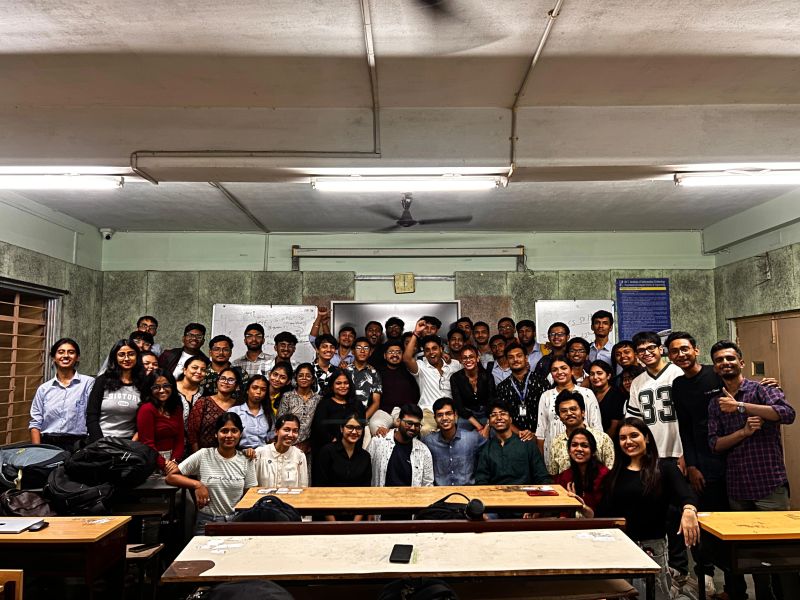
Compare that to December, when we co-hosted the Pre-DevFest workshop with GDG Kolkata. 435 people, our biggest single-day workshop, with two Google Developer Experts, Imran Roshan and Rivu Chakraborty, running hands-on sessions on Gemini CLI and AI security on Kubernetes. It was a huge day and I'm proud of it.
But I learnt different things from each. Big events teach you logistics. Small ones teach you what people actually want. If you only run big events, you stop hearing your members.
Hackathons are mostly about the people who don't win
In December we launched ShowcaseX x TechSprint with RCCTechz and the ACM Student Chapter at RCCIIT, powered by Hack2Skill. 508 participants signed up across 162 teams. That number scared me a little.
The top 50 teams made it to the finals in January and demoed live to judges from DevRelSquad, Keploy and Microsoft. Team Async took the overall prize, and CivicLens won Best Use of Gemini.

What stayed with me though was the 112 teams that didn't make the finals. A lot of them were first-years shipping their first real project under a deadline. If the event only feels good for the winners, you've built a competition, not a community. I'd rather someone leaves a hackathon having shipped something they're proud of than having only watched other people win.
The best thing we ran was a bug hunt
Debug Quest 2.0 ran from late April to mid-May. The idea was simple: we set up a story about a broken place called "Glitch City", participants forked a live codebase, found bugs, and shipped fixes as real pull requests.
101 people turned up at kickoff and 64 stayed active. By the end, 91 issues had been raised and 67 pull requests were merged.
For most of the people who took part, that was their first ever pull request. Some of them were first-years. One had only just finished school, learnt JavaScript during the contest and used Gemini to get unstuck. A lot of the feedback was about Git itself: shared repos, branches, and the first merge conflict.
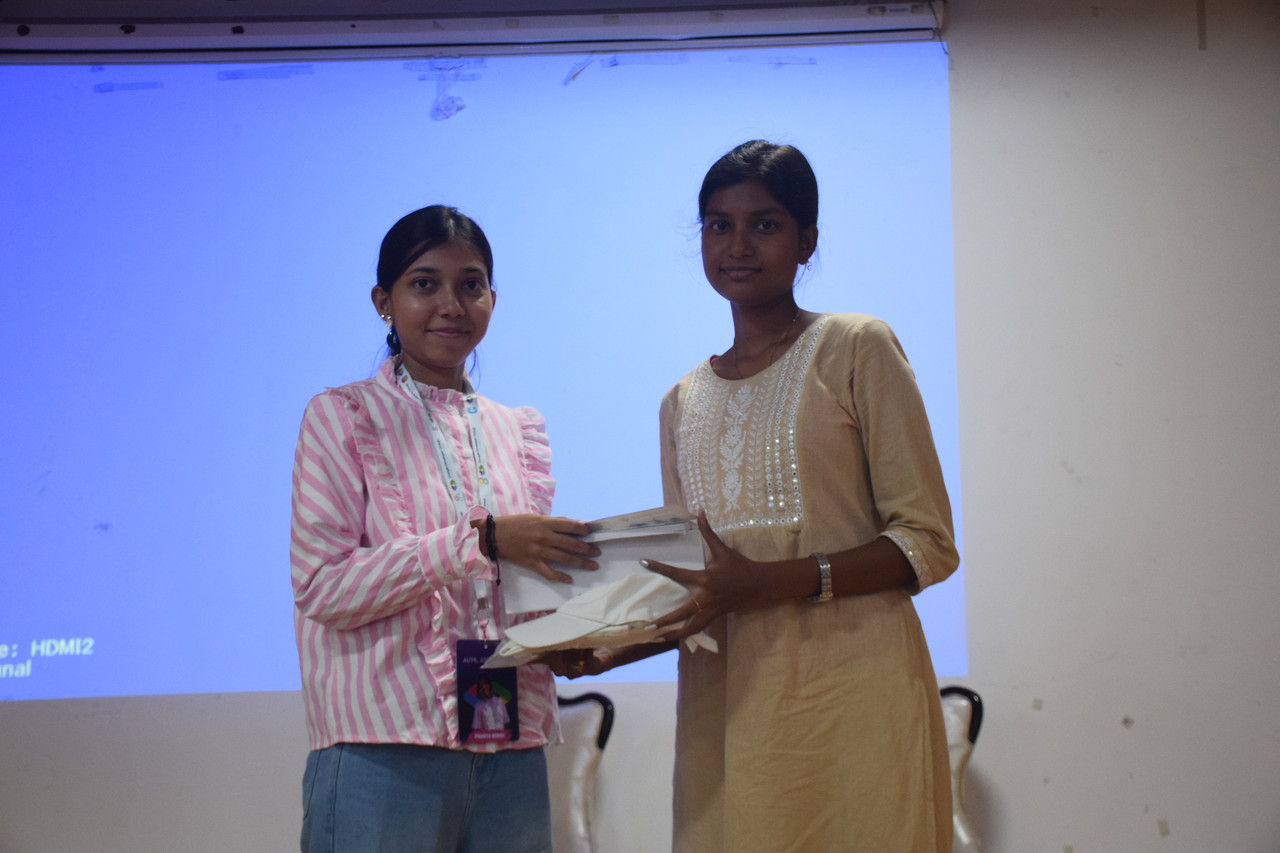
Pragya Singh and Soyam Paul organised it, and we gave out the prizes on stage at TechKotha.
I learnt from this that the most valuable thing a student community can give someone is a safe first attempt. A first PR, a first talk, a first time on a stage. Nobody remembers the slides from a session. They remember the first time they did the thing themselves.
TechKotha was the hardest and the best day
The year ended with TechKotha Episode 3 on 29 May, in the RCCIIT auditorium. Around 200 people came from more than 25 colleges for four talks by Rishiraj Acharya, Soumyaraj Bag, Biswarup Banerjee and Sathya Lakshmi Srinivasan.
I've already written about the 40 days it took to pull it off, including a storm that turned up right in the middle of lunch, so I won't repeat it here. The short version: the feedback came back at 4.3 out of 5, and 90% of attendees said they'd recommend it.
A community is the core team first
I want to be honest about this part, because it's the part people don't see. The chapter is not run by the Lead. It's run by the team.
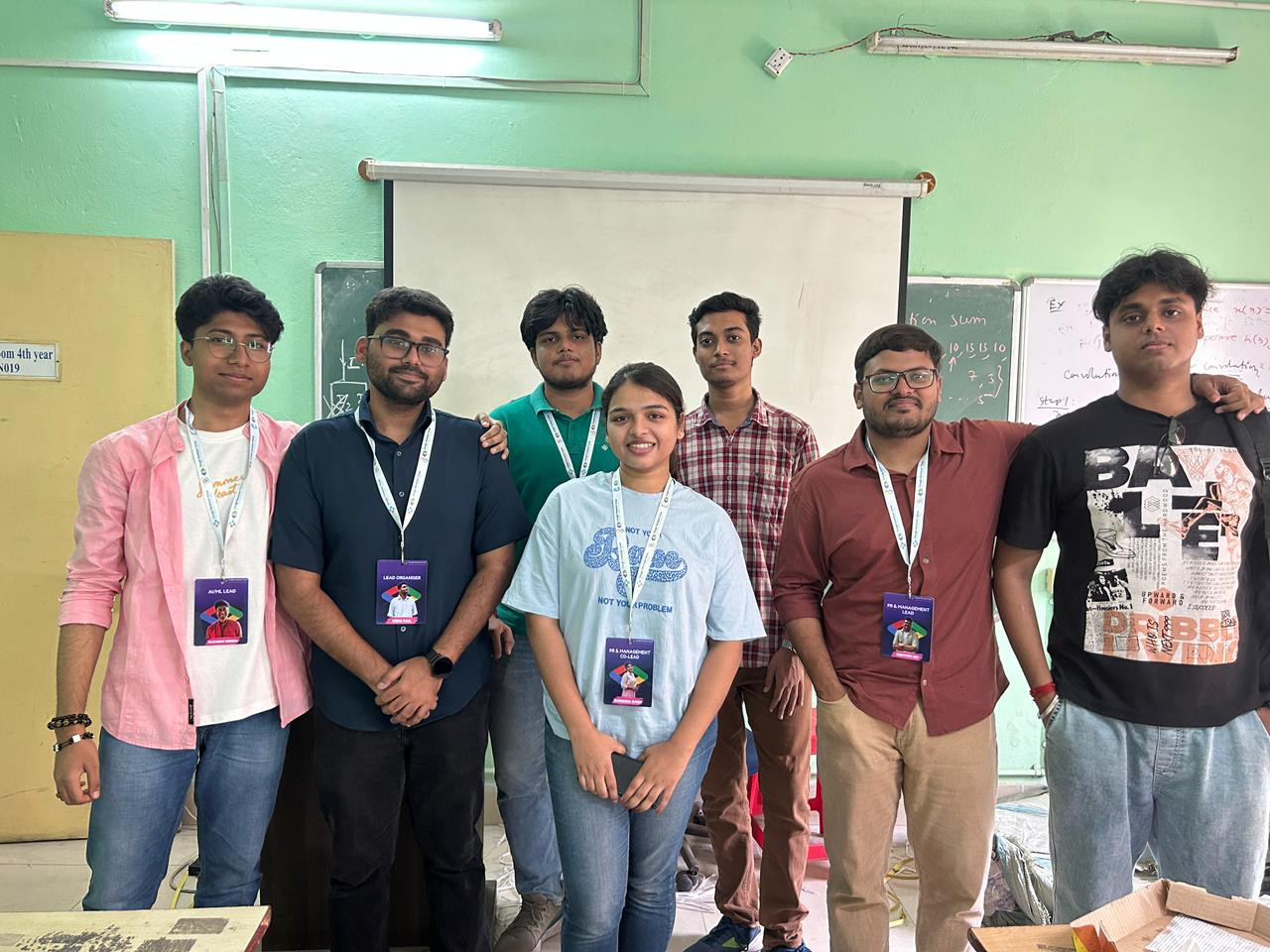
We had 30 people across core and sub-core. Domain leads for Web, App, AI/ML, Web3, Cybersecurity and CP/DSA, a PR and management team, and graphics coordinators who designed everything you saw on Instagram. Shirshika Ghosh coordinated Pre-DevFest and TechKotha. Soyam Paul built a big chunk of our website, which ended up with 13,000+ users over the year. People ran sessions, chased sponsors, fixed registration bugs late at night and carried food through the rain.
The thing that made me happiest by the end was what the team got out of it, not what the chapter got. Two of our teams reached the global top 106 in the Google Solution Challenge. Six of us were Smart India Hackathon national finalists. People won BuildX at IIT KGP, Hackspire, ETHGlobal prizes, and landed internships in Germany, at GoAvo.ai, NIT Durgapur, NESAC and more.
In our end-of-year survey, the year averaged 4.55 out of 5. 100% said they learnt something new. 91% said they'd tell a junior to join. That last one matters most to me. It means the thing will keep going after I leave.
What I'd tell the next Lead
If someone reading this is about to take over a student chapter, here's what I wish someone had told me in September:
- Say no early. You'll get more ideas than you can run well. Running eight events properly beats running fifteen badly.
- Write things down. Every event we documented was easier the second time. Every event we didn't, we had to figure out from scratch.
- Partner instead of competing. Our biggest events were co-hosted with RCCTechz, the ACM chapter and GDG Kolkata. College clubs fighting over the same students is a waste of everyone's energy.
- Give the stage away. The best thing I did all year was step back and let domain leads run things their own way.
- Count first attempts, not just headcount. Registrations are easy to grow. First PRs, first projects and first talks are what actually change people.
xychart-beta
    title "Biggest turnouts of the year"
    x-axis ["Info Session", "Study Jams", "Pre-DevFest", "ShowcaseX", "Solutions Ch.", "TechKotha 3"]
    y-axis "People" 0 --> 550
    bar [155, 128, 435, 508, 101, 200]
Looking back
A year ago I thought leading a community meant organising events. It turned out to mean looking after people: members, speakers, sponsors, and most of all, the team.
We finished the year as the largest tech community at RCC, top 3 in Kolkata and top 5 in West Bengal. I'm proud of that. But the part I'll actually remember is smaller. It's a first-year sending us a screenshot of their first merged PR, or a room of 50 people who didn't want WebVerse to end.
Thank you to everyone who showed up, built something, or helped run it. Onwards.
Rishi Paul, Lead Organiser, GDG on Campus RCCIIT (2025-26)